






《Dr.もん次朗97》To International Athletes, Coaches, and Medical & Sports Professionals
2026/10/06
To International Athletes, Coaches, and Medical & Sports Professionals
# From Parts to the Whole
## My Thoughts on Training, Health, and the Human Body
Recently, the training methods of Yoshinobu Yamamoto, pitcher for the Los Angeles Dodgers, have attracted considerable attention. ( #YoshinobuYamamoto )
What particularly interests me is his approach to training—an approach that, in my view, reflects a more Eastern way of thinking about the human body. Rather than simply building individual muscles and maximizing their strength, it seems to place greater emphasis on the body's inner structure, balance, coordination, and the way the whole body works together.
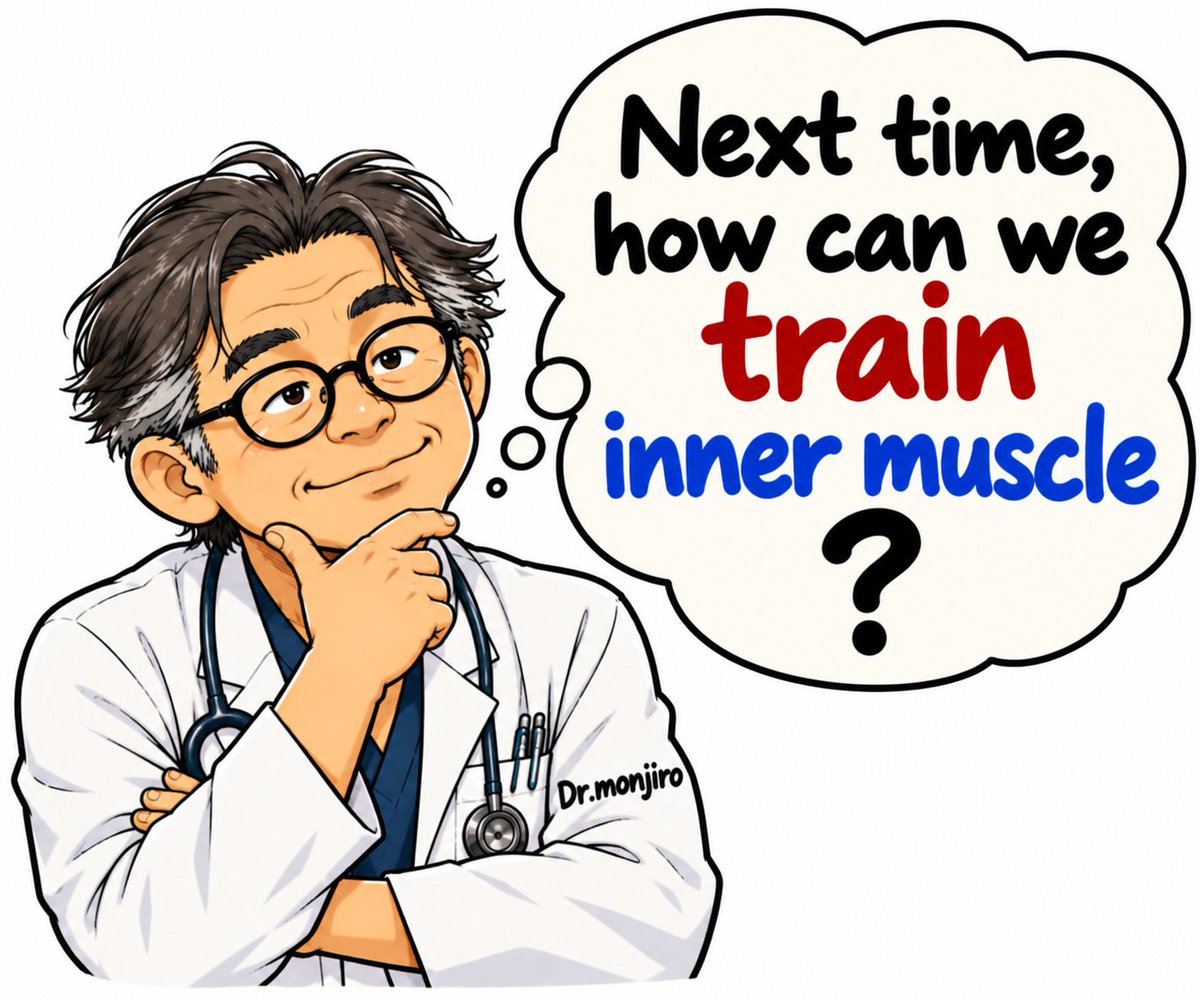
His training has also drawn renewed attention to what I would call an “inner-muscle approach” to movement and physical conditioning.
For me, this has provided a very good opportunity to share some thoughts that I have developed over many years about training, health, and the human body.
After more than 30 years of working with athletes and using CPX (cardiopulmonary exercise testing), one question has stayed with me:
Is modern training becoming too focused on individual parts of the body?
Are we missing something important?
I believe we may need to look at the human body from a different perspective.
---
## 1. Western and Eastern Ways of Thinking
The Western scientific approach has given us extraordinary progress.
Its great strength is reductionism:
Break something down into smaller parts.
Study each part carefully.
Find what is weak.
Then strengthen or correct it.
This approach has transformed medicine, science, and sports training.
But there is a limitation.
Knowing every part does not necessarily mean that we understand the whole.
The human body is not simply the sum of its muscles, organs, and physiological measurements.
The relationships between those parts matter.
In contrast, traditional Eastern thinking tends to begin with the whole.
Balance.
Harmony.
Connection.
And a central axis that organizes the entire body.
If the Western approach tends to move outward—toward greater detail and specialization, the Eastern approach tends to move inward—toward integration and balance.
I do not believe one is right and the other wrong.
We need both.
---
### 2. From Reductionism to Complexity
This brings me to complexity theory.
A living human being is not a machine made by simply assembling independent parts.
Thousands of components interact continuously.
From these interactions, properties appear that cannot always be understood by studying each component separately.
This is emergence.
So perhaps we should not ask only:
“Which muscle should we strengthen?”
We should also ask:
“How does the whole body organize itself to produce movement?”
That changes the way we think about training.
---
### 3. Outer Muscle and Inner Muscle ( #OuterMuscle #InnerMuscle )
Modern training often focuses on what I call the outer muscles:
muscles that produce visible strength, speed, power, and explosive movement.
They are important.
But power needs a foundation.
I use the term inner muscle in a functional sense—not as a strict anatomical classification—to describe the deeper, endurance-oriented muscular system that helps support posture, maintain the body's central axis, and connect movement throughout the body.
My image is simple:
Inner muscles create the pillar.
Outer muscles generate power around that pillar.
Without a stable center, powerful limbs may simply produce disconnected movement.
---
### 4. A Stable Center Creates Free Movement
But the central axis should never become rigid.
This is very important.
The goal is not to make the body stiff.
The goal is to create a center that is:
stable, but flexible;
strong, but relaxed;
organized, but always ready to change.
Traditional Japanese martial arts have long valued a body that does not become fixed or “stuck.”
I see something very similar in what we might call:
Dynamic Stability.
The center remains organized while the rest of the body remains free to respond instantly.
In other words:
The more stable the center, the freer the extremities can become.
---
### 5. The Edge of Chaos ( #EdgeOfChaos )
This idea reminds me of the concept of the Edge of Chaos in complexity theory. ( #ComplexityTheory )
Too much order creates rigidity.
Too much disorder creates instability.
Somewhere between them lies a dynamic region where a system can remain organized while still adapting to change.
This is how I think about the human body.
Not completely stable.
Not completely unstable.
Stable enough to maintain its structure,
but flexible enough to change at any moment.
In my own way of expressing it:
50% order, 50% disorder. ( #50PercentTheory )
The “50%” is not a precise mathematical value.
It is a symbol of balance.
≪to be continued≫
Dr.Monjiro#97(10.6)


