






《Dr.もん次朗98》To International Athletes, Coaches, and Medical & Sports Professionals
2026/10/09
6. How Do We Develop This Inner Foundation?
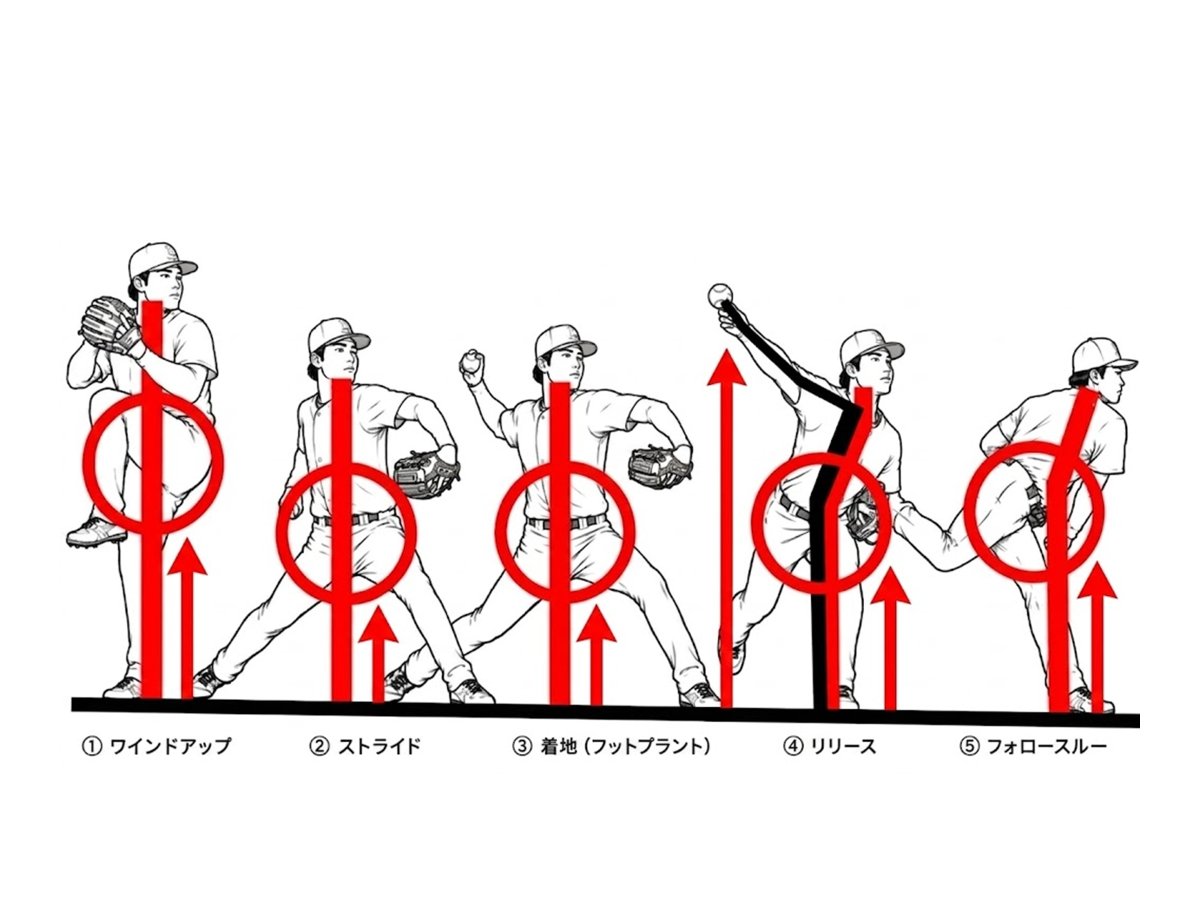
If the inner muscle system forms the body’s central pillar, its role is not simply to maintain posture.
Its more fundamental role is to continuously integrate and stabilize the whole body during movement.
This function can be understood through several important concepts:
APA (Anticipatory Postural Adjustments) — preparing and stabilizing the body just before voluntary movement begins.
DFL (Deep Front Line) — a useful anatomical and functional concept for understanding the deep muscular and fascial connections that help support the body’s central axis.
Dynamic Joint Stability — maintaining appropriate joint alignment and stability while the outer muscles generate larger and more powerful movements.
In other words, while the outer muscles produce visible movement and force, the deeper system works continuously in the background — preparing the body, maintaining its central axis, connecting different parts of the body, and keeping the joints stable throughout movement.
This leads to an important question:
How do we develop this inner foundation?
Here, the principle of specificity becomes essential.
The body adapts to the way it is repeatedly used.
Train repeatedly for explosive power, and the body adapts toward explosive power.
Train repeatedly for fast and powerful movement, and the body becomes better at producing fast and powerful movement.
But I believe the inner foundation develops differently.
It is not built primarily through movements that are too strong, too fast, or too large.
Such training may be effective for developing power and the outer muscle system, but it does not necessarily provide the sustained stimulus needed for the deeper system to continuously stabilize, connect, and coordinate the whole body.
To develop this inner foundation, the stimulus should therefore be relatively gentle to moderate, continuous, and sustained for a sufficiently long period of time.
Rather than asking the body to produce a brief maximum output, we ask it to maintain its central axis, preserve joint stability, and keep the whole body connected throughout continuous movement.
This is why I place great importance on slow, continuous movement.
And the most fundamental example is something remarkably simple:
Walking.
When performed with good posture and without excessive effort, walking repeatedly requires the body to maintain balance, stabilize the joints, coordinate the limbs, and preserve whole-body integration over time.
The inner foundation is developed not by making the body work harder, but by keeping the whole body gently connected and stable for longer.
How Do We Develop This Inner Foundation?――Closing
The inner foundation is developed not by making the body work harder, but by keeping the whole body gently connected and stable for longer.
Watching Yoshinobu Yamamoto’s unique approach to training, I suspect that he, too, may be experiencing these kinds of effects in his own body — a stronger inner foundation, better whole-body integration, and greater stability during movement — and that this may be one of the reasons he continues to train in this way.
This is, of course, my own interpretation based on observing his training approach.
#YoshinobuYamamoto
≪to be continued≫
Dr.Monjiro#98(10.9)


